Orchid
$450



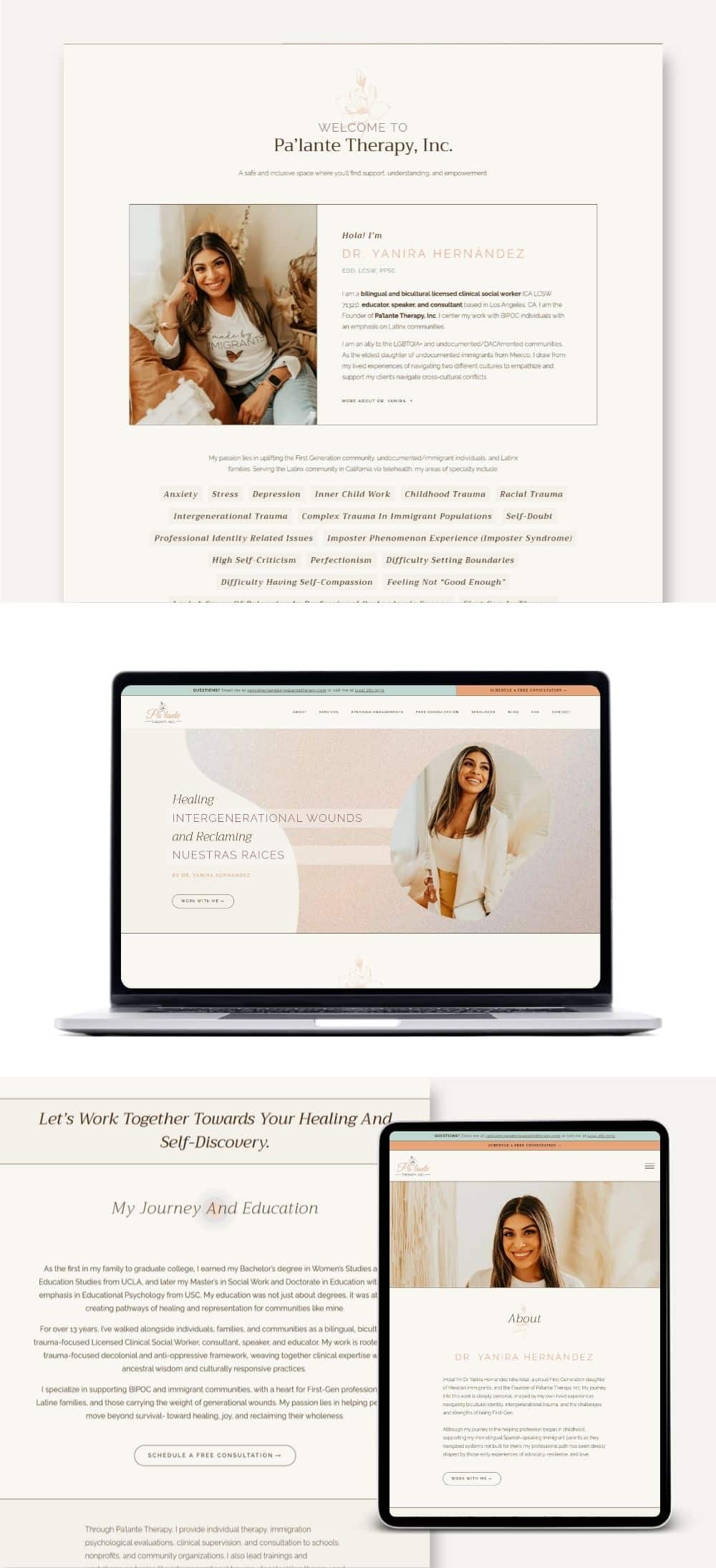
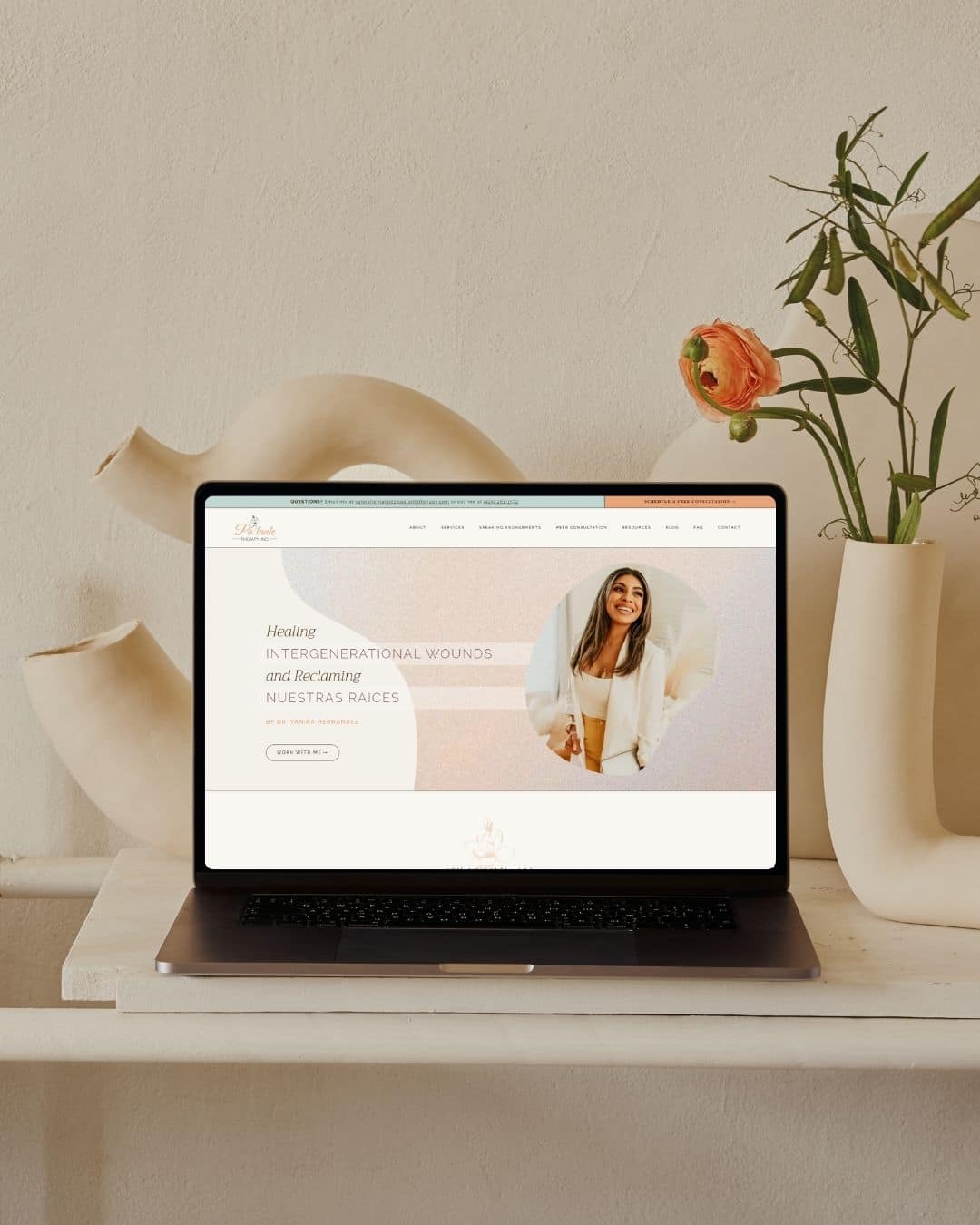
This project is for the Latina therapist, the bilingual clinician, the first-gen woman who built a practice out of lived experience and knows that her story is part of what makes her effective. It is for the practitioner whose work is deeply personal and whose website needs to carry that weight without flattening her into a list of credentials and a scheduling button.
It is also for the therapist who is stretched. Who is already doing the clinical work, the administrative work, the marketing, and the community outreach, and who needs a website for her mental health practice that pulls its own weight without requiring her to manage it manually every single day.
Pa’lante Therapy serves BIPOC individuals with a focus on the Latinx community, and specifically first-generation Latinas navigating intergenerational trauma, imposter syndrome, cross-cultural conflict, and the pressure of being the first. Dr. Yanira Hernandez is also an ally to the LGBTQIA+ and undocumented and DACAmented communities. Her practice is not a general therapy directory listing. It is a home for people who have rarely felt like there was a home for them.
The website we built needed to know the difference.
The site works because every structural decision was made in service of the person arriving on it, not the person presenting it.
We went through three formal approval rounds before launch, which is not uncommon for Peanut Media projects. What those rounds represent is a design process that centers the client’s voice at every stage. Dr. Yanira was not handed a template and asked to approve colors. She was brought into the architecture of her own brand, given language for what she was trying to say, and walked through how each decision served the person who would be arriving on her site from Instagram or Google or Latinx Therapy at the exact moment they were ready to ask for help.
The navigation was restructured to speak to each audience directly. Seventy-one percent of Dr. Yanira’s visitors arrive on mobile, so every layout decision was made with that in mind first. The consultation booking flow was connected to Calendly and embedded into the site so that a visitor could go from reading about Dr. Yanira to requesting an appointment without ever leaving the page or hitting a wall.
The availability toggle replaced four weekly manual email responses with an automated experience that still felt personal, because the words in it were hers. When she was at capacity, the site told people that, offered them the waitlist, and confirmed that she only serves clients in
California, all without her lifting a finger. Blog content was written to establish her as a thought leader in the first-gen Latina mental health space, the same space where publications like Hip Latina had already discovered her through her Instagram hashtags. The site needed to be worthy of that traffic when it arrived.
The site was hosted on a managed server with Wordfence security, uptime monitoring, and monthly performance reporting built into the ongoing relationship from day one. And critically, the site was built to grow with her. When Dr. Yanira transitioned to full-time private practice in the summer of 2024, the site was ready. When she added a clinical supervision service in 2025, the team built it out. When she wanted her speaking engagements section updated and her Femtorship Coaching service page expanded with an embedded inquiry form, that happened too. This is not a project that ended at launch. It is a partnership that is still active.
By April 2026, more than two years after launch, palantetherapy.com was generating 646 unique users and 1,817 pageviews in a single month. Of those users, 636 were new, meaning the site is being discovered consistently by people who did not already know Dr. Yanira. Visitors are spending an average of nearly two minutes on the site and moving through 2.52 pages per session.
The bounce rate sits at 27%.
That number matters. A bounce rate of 27% means that nearly three out of every four visitors who arrive on the site stay and explore. For a private practice therapy website, where the audience is often researching quietly and carefully before making any contact at all, that kind of engagement does not happen by accident. It happens when a site for a bilingual therapist is designed to make someone feel something before they decide anything.
The site’s contact forms are generating steady weekly inquiry volume across both the Peer Consultation Form and the Speaking Engagement Form, with between one and three submissions each per week in recent reporting periods. The infrastructure supporting it all — Wordfence security, managed plugin updates, uptime monitoring at 99.92% availability — is maintained entirely by Peanut Media so that Dr. Yanira never has to think about it.
She is pa’lante. The site is doing its job.
“I’m thrilled that the website has finally launched! It was a delight to work with you and your team. Thank you so much for your patience and bringing my vision for the website to fruition!”
Yanira Hernandez did not come to Peanut Media because she wanted a prettier website. She came because the one she had was quietly working against her, and she knew it.
She had built something real. A private practice rooted in her own story, her own community, her own language. As a first-generation graduate student who had navigated imposter syndrome, immigration pressure, and the particular loneliness of being the first in your family to go as far as you went, she understood her clients in a way that most therapists simply could not. That understanding was her credential. It was also the thing her website completely failed to communicate.
What visitors found instead was a Wix template that was difficult to navigate, visually cluttered, and organized in a way that made no distinction between someone looking for a therapist, a colleague seeking clinical consultation, and a college reaching out to book a keynote speaker. All three audiences were arriving. None of them were being spoken to directly. And somewhere in the menu, buried under a heading that made no particular promise, was a “coming soon” note for immigration psychological evaluations that had been sitting there, untouched, since the day she launched.
People kept asking about it. She kept meaning to build it out. The infrastructure was never quite there.
On top of all of that, she was at capacity. The practice was full, which is a good problem, but it came with its own kind of weight. She was getting four emails a week from people asking if she was taking new clients. Four emails she had to personally read, respond to with a canned message, and follow up on, for people she could not yet help. It was not a crisis. It was just friction, the kind that accumulates quietly and costs more than you realize until someone names it.
We named it together in the strategy session. And then we built something that could hold all of it.
The new site gave each of Yanira’s three audiences their own front door. Therapy clients moved through a clear journey that ended at a Calendly booking flow embedded directly in the page, no redirects, no dead links, no confusion about whether she was even accepting clients. The availability toggle handled that. When she was at capacity, the site said so, offered the waitlist, asked visitors to confirm they were in California, and moved them forward without her having to type a single word. When she was open, the path to booking was as short as it could possibly be.
Colleagues looking for peer clinical consultation found their own landing page, built to speak to a mental health professional, not a potential therapy client. Organizations considering her for a speaking engagement found a page with space for logos, credentials, and a direct inquiry form, the kind of page you send in a press kit instead of a PDF.
And the immigration psychological evaluations page finally launched. Two years of “coming soon” became a full service page, written clearly enough that an undocumented individual or their attorney could understand exactly what the evaluation was, why it mattered, and how to request one.
Seventy-one percent of her visitors were arriving on mobile. Every layout decision was made with that in mind. The site was fast, secure, maintained by Peanut Media from day one, and built on WordPress so it could grow without starting over.
It launched January 17, 2024. Yanira’s message that night: “I’m thrilled that the website has finally launched! It was a delight to work with you and your team. Thank you so much for your patience and bringing my vision for the website to fruition!”
That was the beginning, not the end. By the summer of 2024 she had transitioned to full-time private practice. By 2025 she had added a clinical supervision service and expanded her Femtorship Coaching page with a new embedded inquiry form. The team built it all out. Monthly performance reports go out. The site is monitored. The plugins are updated. She does not have to think about any of it.
By April 2026, the site was pulling 646 unique users a month, 636 of them new visitors discovering her for the first time. The bounce rate sat at 27%, meaning nearly three out of every four people who arrived stayed and explored. The Speaking Engagement Form and the Peer Consultation Form were both receiving steady weekly submissions. The infrastructure running underneath all of it, Wordfence blocking thousands of attacks, uptime holding at 99.92%, had never once required her attention.
It depends on what you are trying to build. If you are still figuring out who you serve and what you offer, this level of work might be premature. But if you are clear on your clinical niche, you are actively seeing clients, and you want a website for your therapy practice that attracts the right people without requiring you to personally field every inquiry, then the investment makes sense sooner than most people think. Dr. Yanira came to us with a clear vision and a specific community she was built to serve. That clarity is what made the work possible. We help you refine it. We do not invent it for you.
The Pa’lante Therapy project opened in October 2023 and launched in January 2024, which is roughly three months from strategy to live site. That timeline includes a discovery session, a brand blueprint, design, development, three rounds of client approvals, and content. It moves at the pace of the collaboration. The approval process is not a bottleneck. It is what ensures the finished site actually reflects you.
You need to be involved in the decisions that only you can make: your story, your services, your values, what you want people to feel when they find you. The operational parts — the hosting, the security, the updates, the monthly reports, the form maintenance — those belong to us. Dr. Yanira has not had to think about a plugin update or a DNS record since her site launched. That is the point.
No. The ongoing relationship is built into the work. We send monthly performance reports, monitor uptime, handle all technical maintenance, and are available when things need to change. Dr. Yanira has added a new service page, updated her Femtorship Coaching section, expanded her speaking engagements page, and received a full UX and conversion audit since her site launched. The site you launch is not the last version of your site. It is the foundation.
This is exactly where Peanut Media is built to work. Specialty practices, culturally specific services, and practitioners whose identity is woven into their clinical work are the clients we do our best work for. Generic website templates are not built to hold the specificity of what Dr. Yanira offers. A custom site built around her actual story, her actual language, and her actual community is what made the difference. That specificity is not a complication for us. It is the work.